Long-Term vs. Short-Term Investment Strategies: Which Approach Builds More Wealth?
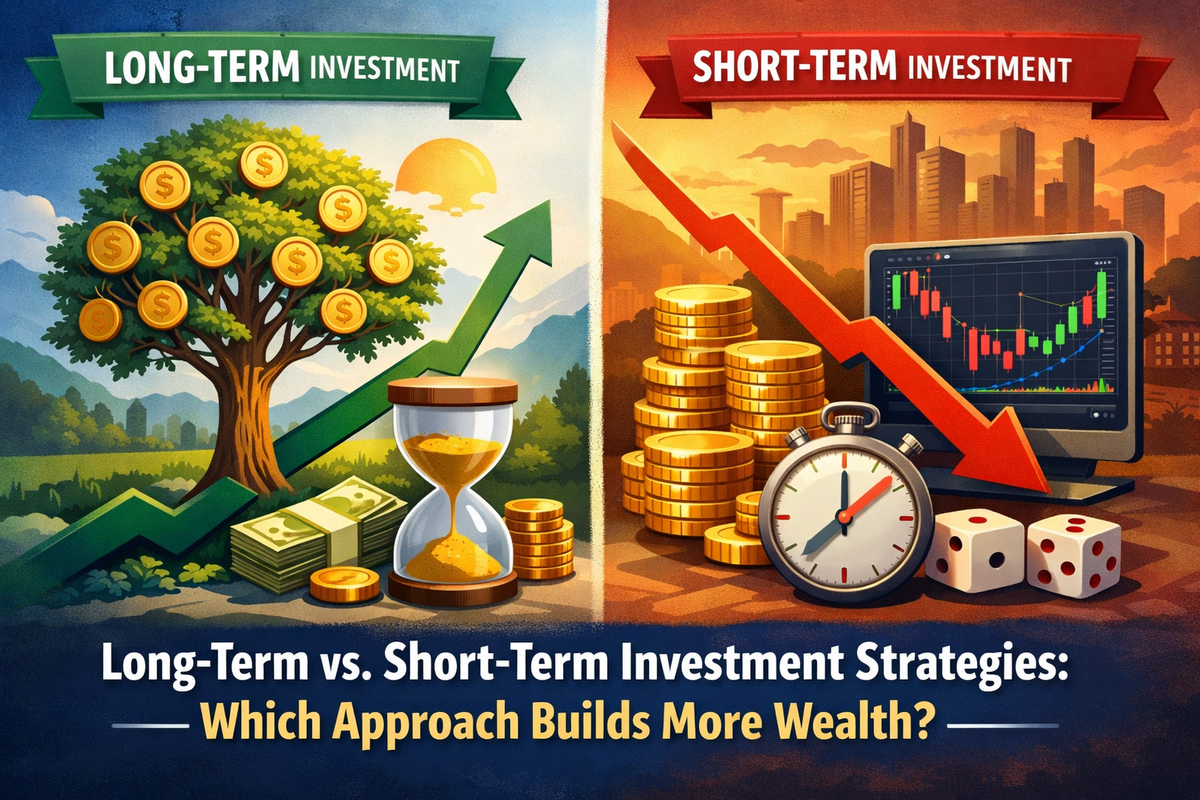
The debate between long-term and short-term investment strategies has persisted for decades, with passionate advocates on both sides. While some investors build substantial wealth through patient, buy-and-hold approaches, others achieve impressive returns through active trading and market timing. Understanding the fundamental differences between these strategies, along with their respective benefits and risks, is crucial for anyone seeking to optimize their investment approach and build lasting wealth.
This comprehensive analysis examines both investment philosophies, exploring how compounding returns, tax implications, time commitment, and psychological factors influence success rates. By understanding these critical elements, investors can make informed decisions aligned with their financial goals, risk tolerance, and lifestyle preferences.
Understanding Investment Time Horizons
Investment time horizons form the foundation of any wealth-building strategy. Long-term investing typically involves holding assets for five years or more, often extending to decades. This approach focuses on fundamental value, business growth, and the power of time to smooth out market volatility. Investors following this path generally buy quality assets and maintain their positions through various market cycles.
Short-term investing, conversely, involves holding periods ranging from seconds to several months. Day traders might hold positions for minutes or hours, while swing traders typically maintain positions for days to weeks. These strategies capitalize on price movements, market inefficiencies, and technical patterns rather than fundamental business performance.
The distinction between these approaches extends beyond simple time frames. Long-term strategies emphasize asset selection based on intrinsic value, competitive advantages, and growth potential. Short-term strategies prioritize price action, momentum, volatility, and market sentiment. Each philosophy requires different skill sets, tools, and mindsets to execute successfully.
The Power of Compounding Returns
Compounding represents one of the most powerful forces in wealth building, and it overwhelmingly favors long-term investors. When investment returns generate additional returns over time, wealth grows exponentially rather than linearly. This mathematical principle creates dramatic wealth accumulation over extended periods.
Consider an initial investment of $10,000 with an average annual return of 10%. After one year, the investment grows to $11,000. In year two, the 10% return applies to $11,000, generating $1,100 in gains rather than the original $1,000. By year ten, the investment reaches approximately $25,937. After thirty years, it grows to $174,494—representing a 1,645% total return.
The mathematics become even more compelling when considering regular contributions. An investor contributing $500 monthly for thirty years at 10% annual returns accumulates approximately $1,130,244. The same monthly contribution over just ten years grows to only $102,422. The additional twenty years more than decuples the wealth, demonstrating how time amplifies compounding effects.
Short-term trading disrupts this compounding mechanism. Each time an investor exits a position, they reset the compounding clock. While successful short-term traders can achieve high percentage returns, they must consistently outperform long-term investors to overcome the mathematical advantage of uninterrupted compounding. Historical data suggests this proves exceptionally difficult over extended periods.
Real-World Compounding Examples
Warren Buffett's Berkshire Hathaway provides a compelling case study. From 1965 to 2024, Berkshire generated a compound annual return of approximately 19.8%, transforming an initial $1,000 investment into over $42 million. This extraordinary wealth creation resulted from decades of uninterrupted compounding, not from market timing or frequent trading.
The S&P 500 index offers another illustrative example. Despite numerous market crashes, recessions, and crises, the index has delivered approximately 10% average annual returns over the past century. Investors who remained invested throughout all market conditions captured these returns. Those who attempted to time the market frequently missed the strongest recovery days, significantly diminishing their overall returns.
Research from JP Morgan consistently shows that missing just the ten best trading days over a twenty-year period reduces overall returns by more than half. This data underscores the difficulty of successful short-term trading and the power of remaining invested for long-term compounding.
Tax Implications and Their Impact on Wealth
Tax treatment represents a critical but often underestimated factor in investment success. The tax code in most developed countries, including the United Kingdom and United States, strongly favors long-term investment through preferential capital gains rates and tax-deferred growth opportunities.
Long-Term Capital Gains Advantages
In the United States, assets held longer than one year qualify for long-term capital gains rates, which range from 0% to 20% depending on income levels. This compares favorably to short-term capital gains, taxed as ordinary income at rates reaching 37%. For a high-income investor, this difference means keeping 63 cents of every dollar gained from short-term trading versus 80 cents from long-term holdings—a 27% advantage before considering state and local taxes.
United Kingdom investors face similar incentives. While UK capital gains tax rates apply regardless of holding period, annual exemptions and lower rates compared to income tax still favor less frequent trading. Additionally, holding shares in Individual Savings Accounts (ISAs) or Self-Invested Personal Pensions (SIPPs) provides complete tax shelters for long-term investors.
The Hidden Cost of Tax Drag
Short-term traders face what financial professionals call "tax drag"—the continuous erosion of portfolio value through frequent taxable events. Consider two investors, each generating 20% returns annually. The long-term investor realizes gains once after ten years, while the short-term trader realizes gains annually. Assuming a 37% short-term rate versus a 20% long-term rate, the long-term investor's $100,000 grows to approximately $517,000 after taxes. The short-term trader's portfolio grows to only $315,000—a $202,000 difference attributable entirely to tax treatment.
This tax drag compounds annually, creating an increasingly insurmountable handicap for active traders. The short-term trader must generate significantly higher pre-tax returns simply to match the after-tax performance of the long-term investor—a mathematical reality that many active traders overlook when evaluating their strategies.
Tax-Advantaged Accounts and Long-Term Strategies
Retirement accounts like 401(k)s, IRAs, and SIPPs amplify the advantages of long-term investing. These vehicles allow decades of tax-deferred or tax-free growth, eliminating the annual tax drag entirely. The combination of compounding returns and tax deferral creates exponential wealth accumulation that short-term taxable trading simply cannot match.
Time Commitment and Lifestyle Considerations
The time investment required for each strategy differs dramatically and significantly impacts which approach suits individual circumstances. This factor often receives insufficient consideration when investors choose their strategies.
Long-Term Investment Time Requirements
Long-term investing demands relatively minimal time commitment once initial research and portfolio construction are complete. Investors might spend several hours monthly reviewing holdings, reading company reports, and monitoring overall portfolio performance. Annual rebalancing and occasional position adjustments represent the primary active management requirements.
This passive approach allows investors to maintain careers, businesses, and personal lives without constant market monitoring. The psychological freedom from daily price watching provides additional value that transcends purely financial considerations. Many successful long-term investors check their portfolios quarterly or even annually, focusing instead on their primary income sources and personal development.
Short-Term Trading Time Demands
Short-term trading, particularly day trading, essentially functions as a full-time occupation. Successful traders typically spend 6-12 hours daily researching markets, analyzing charts, executing trades, and managing positions. This time commitment extends beyond market hours to include pre-market preparation, post-market analysis, and continuous education on strategies and tools.
The intensity increases during volatile market periods when positions require constant monitoring and rapid decision-making. Traders cannot simply "set and forget" their positions—each holding demands active management and risk control. This requirement makes short-term trading incompatible with traditional employment or other significant time commitments.
Additionally, the learning curve for effective short-term trading is steep and time-consuming. Developing the technical analysis skills, risk management discipline, and psychological resilience required for consistent profitability typically requires years of dedicated study and practice. Many aspiring traders underestimate this investment, leading to frustration and financial losses.
Psychological Factors and Success Rates
The psychological demands of investing represent perhaps the most underestimated determinant of long-term success. Human psychology creates predictable biases and emotional responses that significantly impact investment outcomes.
Emotional Challenges in Short-Term Trading
Short-term trading confronts investors with constant emotional turbulence. The rapid pace and frequent wins and losses create a psychological roller coaster that taxes even experienced traders. Fear and greed alternate rapidly, often leading to impulsive decisions that undermine strategy and discipline.
Loss aversion—the psychological tendency to feel losses more intensely than equivalent gains—becomes particularly problematic for active traders. Research shows humans feel losses approximately 2.5 times more intensely than gains. When facing multiple daily decisions, this bias leads to premature profit-taking and delayed loss recognition, systematically undermining returns.
The gambler's fallacy also plagues short-term traders. After several losing trades, traders often increase position sizes or take excessive risks to "recover" losses quickly. This revenge trading typically amplifies losses rather than reversing them. Conversely, winning streaks can create overconfidence, leading to excessive risk-taking and eventual drawdowns.
Long-Term Investment and Emotional Stability
Long-term investing mitigates many psychological pitfalls by reducing decision frequency and emphasizing fundamental analysis over price action. When investors evaluate businesses rather than chart patterns, emotional reactions to short-term volatility diminish. Understanding that temporary price declines represent natural market fluctuations rather than permanent capital impairment helps maintain discipline during market downturns.
The concept of "time in the market versus timing the market" captures this psychological advantage. Long-term investors acknowledge their inability to predict short-term price movements and instead rely on business quality and time to generate returns. This acceptance eliminates the stress of attempting market timing and the regret that accompanies missed opportunities.
However, long-term investing presents its own psychological challenges. Maintaining conviction during severe market declines tests even the most disciplined investors. The 2008 financial crisis, for example, saw the S&P 500 decline by approximately 57% from peak to trough. Investors who sold near the bottom locked in devastating losses, while those who remained invested recovered and went on to achieve substantial gains.
Statistical Success Rates
Empirical evidence consistently demonstrates that long-term investors achieve higher success rates than short-term traders. Studies examining brokerage account data reveal that approximately 90-95% of day traders lose money over time, with only 1-5% achieving consistent profitability. Even among the profitable minority, many fail to generate returns exceeding what passive index investing would provide on a risk-adjusted basis.
Research published in academic journals confirms these findings. A study analyzing trading accounts in Taiwan, one of the world's most active trading markets, found that only 5% of day traders achieved consistent profitability. Furthermore, even successful traders often ceased trading within several years, suggesting that sustained profitability proves exceptionally difficult.
Long-term investors demonstrate substantially higher success rates. Historical data shows that investors holding diversified equity portfolios for periods exceeding 15 years have never experienced negative real returns in major developed markets over the past century. While past performance doesn't guarantee future results, this statistical reality underscores the power of time and diversification.
Risk Management and Volatility
Understanding and managing risk represents a fundamental requirement for investment success, yet the two strategies approach risk management through entirely different frameworks.
Long-Term Risk Mitigation
Long-term investors manage risk primarily through diversification, asset allocation, and fundamental analysis. By holding multiple uncorrelated assets across various sectors, geographies, and asset classes, investors reduce portfolio volatility and protect against company-specific risks.
Time itself functions as a risk management tool for long-term investors. While short-term price volatility remains unavoidable, the probability of positive returns increases substantially as holding periods extend. The historical data shows that one-year holding periods in equity markets carry significant risk of loss, while 20-year periods demonstrate remarkably consistent positive returns across various starting points.
Dollar-cost averaging—the practice of investing fixed amounts at regular intervals—further reduces timing risk for long-term investors. This approach eliminates the need to identify optimal entry points and naturally results in purchasing more shares when prices are low and fewer when prices are high.
Short-Term Risk Exposure
Short-term traders face concentrated risks that require constant vigilance and sophisticated risk management protocols. The high frequency of trades amplifies the impact of individual losses, while leverage—commonly employed to enhance returns—can magnify drawdowns catastrophically.
Stop-loss orders, position sizing rules, and maximum daily loss limits represent essential risk management tools for active traders. However, these mechanical safeguards cannot eliminate the fundamental risks inherent in predicting short-term price movements. Black swan events, flash crashes, and sudden news announcements can trigger losses that exceed predetermined risk parameters.
The volatility that short-term traders seek to exploit simultaneously represents their greatest risk. While volatility creates profit opportunities, it also generates unpredictable price swings that can quickly reverse profitable positions. The 2010 flash crash, for example, saw the Dow Jones Industrial Average plunge nearly 1,000 points in minutes before recovering, devastating traders with stop-loss orders and those holding leveraged positions.
Portfolio Construction and Strategy Implementation
The practical implementation of each strategy requires different approaches to portfolio construction, asset selection, and ongoing management.
Building a Long-Term Portfolio
Long-term portfolios typically emphasize index funds, quality individual stocks, bonds, and real estate. The specific allocation depends on factors including age, risk tolerance, income needs, and financial goals. A common framework suggests subtracting one's age from 110 or 120 to determine the equity percentage, with the remainder in bonds and other fixed-income securities.
Modern portfolio theory advocates for broad diversification across asset classes that exhibit low correlation. A balanced long-term portfolio might include domestic equities, international equities, bonds, real estate investment trusts, and perhaps alternative investments like commodities. Regular rebalancing ensures that the portfolio maintains target allocations as asset values fluctuate.
Quality metrics guide security selection within long-term portfolios. Factors like consistent earnings growth, strong competitive positions, robust balance sheets, and shareholder-friendly management indicate businesses likely to thrive over decades. Many successful long-term investors focus on companies with durable competitive advantages—what Warren Buffett terms "economic moats."
Short-Term Trading Systems
Short-term traders typically employ technical analysis systems based on price patterns, momentum indicators, volume analysis, and market sentiment measures. Common strategies include trend following, mean reversion, breakout trading, and pairs trading. Each approach requires specific technical skills and carries distinct risk-reward profiles.
Position sizing becomes critical for short-term traders. Most professionals risk no more than 1-2% of their trading capital on any single position, ensuring that inevitable losses don't devastate the overall account. This disciplined approach to risk management separates successful traders from those who eventually blow up their accounts.
Technology infrastructure also differentiates successful short-term traders. Professional-grade charting software, fast internet connections, direct market access, and sophisticated order execution systems represent necessary investments. The costs of these tools can be substantial, creating another barrier to profitable short-term trading.
Market Efficiency and Information Advantages
The efficient market hypothesis suggests that asset prices reflect all available information, making consistent outperformance through trading extremely difficult. While markets aren't perfectly efficient, the degree of efficiency significantly impacts the viability of different investment strategies.
Long-Term Investing and Market Inefficiencies
Long-term investors can exploit certain market inefficiencies that persist over extended periods. Behavioral biases cause markets to overreact to short-term news while undervaluing long-term prospects. Patient investors who conduct thorough fundamental analysis can identify companies trading below intrinsic value and hold them until the market recognizes their true worth.
The market's short-term focus creates opportunities for long-term investors. Quarterly earnings pressures often cause businesses to prioritize immediate results over long-term value creation. Investors willing to look beyond quarterly fluctuations and focus on multi-year business development can achieve superior returns by backing companies making investments that temporarily depress earnings but build competitive advantages.
Short-Term Trading and Information Speed
Short-term traders compete in an environment where information advantages have largely disappeared. High-frequency trading firms employ sophisticated algorithms and microsecond execution speeds that retail traders simply cannot match. These institutional participants have effectively arbitraged away most short-term inefficiencies accessible to individual traders.
The rise of algorithmic trading has fundamentally altered short-term market dynamics. Computer programs now execute the majority of daily trading volume, responding to technical signals and news events far faster than human traders. This technological evolution has compressed the timeframe in which exploitable patterns exist, making consistent short-term profitability increasingly difficult.
Financial Goals and Strategy Alignment
Ultimately, the choice between long-term and short-term strategies should align with specific financial objectives, life circumstances, and personal characteristics rather than abstract notions of superiority.
When Long-Term Strategies Excel
Long-term investing proves optimal for retirement savings, college funding, and other distant financial goals. The combination of compounding returns, tax advantages, and reduced stress makes this approach ideal for accumulating wealth over decades. Individuals with limited time for active portfolio management, lower risk tolerance, or careers demanding their primary attention particularly benefit from long-term strategies.
Investors seeking passive income through dividends also find long-term strategies aligned with their objectives. Building a portfolio of quality dividend-paying stocks requires patience but can eventually generate substantial cash flow without selling shares. This approach provides financial independence while preserving capital for future generations.
When Short-Term Trading Might Make Sense
Short-term trading may suit individuals who genuinely enjoy the activity, possess the requisite skills and discipline, and can afford the substantial time investment. Some traders view their activity as a business rather than investing, accepting the challenges and risks in exchange for the potential rewards and intellectual stimulation.
Professional traders who develop genuine expertise in specific markets or instruments may achieve consistent profitability. However, even these individuals often transition significant portions of their wealth into long-term investments once sufficient capital accumulates, recognizing that trading income remains uncertain while compounded long-term returns prove more reliable.
Younger investors with limited capital and longer time horizons to recover from potential losses might experiment with small portions of their portfolio in short-term trading for educational purposes. This approach allows learning about markets and personal risk tolerance without jeopardizing financial security.
Creating a Balanced Approach
Rather than viewing these strategies as mutually exclusive, some investors adopt hybrid approaches that capture benefits from both philosophies while managing their respective risks.
The Core-Satellite Strategy
One balanced framework involves maintaining a core long-term portfolio representing 80-90% of investment capital while allocating a smaller satellite portion to shorter-term opportunities. The core provides stability, captures compounding returns, and receives tax-advantaged treatment. The satellite allows tactical positioning and addresses the desire for more active participation without risking overall financial security.
This approach acknowledges that investors may possess specific insights or expertise in certain areas while recognizing their limitations in timing broader markets. A technology professional, for example, might maintain a diversified long-term portfolio while making informed shorter-term trades in their industry based on professional knowledge.
Gradual Strategy Evolution
Life stages naturally influence appropriate investment strategies. Younger investors might allocate more to growth-oriented longer-term holdings, accepting higher volatility in exchange for greater appreciation potential. As retirement approaches, gradually shifting toward income-generating investments and more conservative positioning aligns strategy with changing needs.
Some successful investors begin with short-term trading to learn about markets and develop investment skills, eventually transitioning toward longer holding periods as their capital base grows and they recognize the advantages of compounding. This evolution reflects maturation in understanding how wealth actually accumulates.
Conclusion: The Evidence Points Toward Long-Term Wealth Building
The preponderance of evidence, spanning decades of market data and behavioral research, strongly favors long-term investment strategies for the vast majority of individuals. The mathematical power of compounding returns, significant tax advantages, manageable time requirements, and higher success rates create a compelling case for patient, disciplined investing.
Short-term trading, while potentially profitable for a small minority of skilled practitioners, presents formidable challenges including substantial time demands, emotional stress, tax disadvantages, and statistical improbability of consistent success. The competitive environment continues intensifying as technology and professional participants dominate short-term price discovery.
Successful wealth building requires aligning investment strategy with personal financial goals, risk tolerance, time availability, and psychological makeup. For most investors, this alignment points decisively toward long-term strategies emphasizing quality assets, diversification, and the patience to allow time and compounding to work their magic. While short-term market movements capture attention and create excitement, lasting wealth typically accumulates quietly through decades of disciplined long-term investing.
The question isn't whether one can achieve success through short-term trading—clearly some individuals do. Rather, the question is whether most investors can realistically expect better outcomes from active trading than from passive long-term investing. Historical evidence and mathematical reality suggest the answer is no. Building wealth remains fundamentally about time, not timing.

Comments ()