Gold (XAU/USD) Trading Masterclass: The Only Guide You Need

Why XAU/USD Is Different (And Why Most Traders Misread It)
Gold (XAU/USD) is one of the most traded instruments globally, but it behaves differently from many FX pairs because it sits at the intersection of:
- Macro (rates, inflation, real yields)
- Risk sentiment (risk-on / risk-off flows)
- USD strength (DXY influence)
- Liquidity and volatility spikes (especially around US data)
- Technical levels respected by large participants
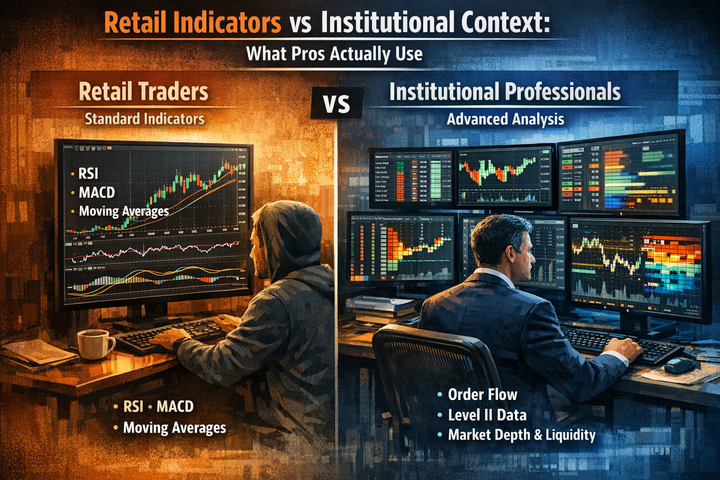
Gold can trend cleanly for weeks—then whip violently in minutes during a data release. A serious XAU/USD trader is not the person with the “best indicator.” It is the person with the best framework.
1) What Moves Gold: The Real Drivers You Must Know
1.1 The Big Three: USD, Yields, and Real Yields
In simple terms:
- Gold tends to rise when the USD weakens (because gold is priced in USD).
- Gold tends to fall when yields rise, especially real yields.
- Gold tends to rise when real yields fall (opportunity cost of holding non-yielding gold decreases).
Real yields are roughly:
Nominal yields – inflation expectations
You don’t need to calculate it daily, but you need to understand the concept:
When markets expect tighter policy or higher real returns on cash/bonds, gold often struggles.
1.2 Risk Sentiment: When Fear Buys Gold (But Not Always)
Gold is often seen as a “safe haven,” but it’s not a one-button trade.
Typical patterns:
- Risk-off + USD strength can create mixed outcomes (gold can rise or chop).
- In severe stress, liquidity events can cause gold to drop briefly as participants raise cash, then rebound.
- During calmer periods, gold trades more “macro cleanly” with yields and USD.
1.3 Central Bank Demand and Long-Term Flows
Longer-term gold trends can be influenced by:
- central bank accumulation/diversification
- inflation regimes
- geopolitical risk and reserve management
For trading, you treat these as background tailwinds/headwinds, not intraday triggers.
2) Gold’s “Personality”: Volatility, Spreads, and Stop Placement
2.1 Gold Is Volatile—Your Stop Must Respect That
Gold routinely moves far more than major FX pairs in a session. If your stop is placed “like EUR/USD,” you’ll get stopped out repeatedly.
Serious traders:
- place stops at structural invalidation
- size positions based on that stop (not based on emotion)
- accept that gold needs room to breathe
2.2 Spreads and Slippage: The Silent Trade Killer
Gold can widen spreads during:
- news events (CPI, NFP, FOMC)
- low-liquidity hours
- sharp breakouts
This matters if you scalp or use tight stops/targets. A strategy that “works” on a chart may fail live due to costs.
3) The XAU/USD Trading Framework (Setup → Execution)
This framework mirrors professional practice:
- Market Regime: trend or range?
- Key Levels: weekly/daily highs/lows, major zones, liquidity pools
- Catalysts: upcoming data, Fed events, risk headlines
- Two-Scenario Plan: “If X happens, I do Y; if Z happens, I do W.”
- Entry Trigger: confirmation or limit execution rule
- Invalidation: where the setup is wrong
- Position Sizing: risk-based sizing
- Management: targets, trailing, partials (rule-based)
- Review: journal, R-multiples, mistakes, refinement
4) Top-Down Analysis for Gold (The Only Clean Way)
4.1 Weekly (W1): The Macro Map
On the weekly chart, you identify:
- major swing highs/lows
- multi-week support/resistance zones
- the dominant trend structure
Your question on W1 is:
Are we expanding (trending) or compressing (ranging)?
4.2 Daily (D1): The Decision Zones
On D1 you refine:
- where price is likely to react
- where stops/liquidity sit (above highs, below lows)
- the prior day high/low (often important intraday)
Gold respects zones more than razor-thin lines. Mark areas, not pixels.
4.3 H4/H1: The Trading Context
Here you decide:
- trend continuation opportunities
- breakout conditions (compression → expansion)
- range boundaries and rejection points
4.4 M15/M5: Execution Only
Lower timeframes are for:
- timing entries with triggers
- managing risk precisely
- avoiding chasing
A serious trader does not form bias on M5. They execute on M5.
5) Gold Sessions: When XAU/USD Moves Best
While conditions vary, gold often shows high-quality movement during:
- London open and London morning
- New York open and early NY
- US data releases (high risk, high opportunity)
Gold can drift during very quiet hours and then explode when liquidity returns. Timing is not optional in XAU/USD—it is part of the strategy.
6) The Three Core XAU/USD Strategies (A Professional Playbook)
A masterclass should not give you 20 strategies. It should give you 3 that cover most regimes.
Strategy 1: Trend Pullback Continuation (Best for Trending Regimes)
Conditions
- H4/H1 trend structure is clear (HH/HL for bullish; LH/LL for bearish)
- pullback into a key zone (prior support/resistance, demand/supply)
- volatility is “normal” (not random whipsaw conditions)
Entry Triggers (choose one; do not mix)
- break of minor structure in trend direction (e.g., M15 lower-high breaks for long)
- reclaim of key intraday level after pullback
- confirmation candle close with defined invalidation
Invalidation
- below pullback low (for longs) beyond the zone that must hold
Targets
- prior swing high/low
- next higher timeframe zone
- measured move of the impulse leg
Practical example (hypothetical)
- Account: $10,000
- Risk per trade: 1% ($100)
- Stop distance: $6.50 (gold moves in dollars)
Position size = $100 / $6.50 = 15.38 “risk units” (your broker’s contract sizing will differ; the principle is constant)
Key point: Stop first, size second.
Strategy 2: Breakout + Retest (Best for Compression → Expansion)
Conditions
- price compressing (tight range, repeated tests)
- clear range boundaries on H1/H4
- breakout candle closes decisively beyond boundary
Execution rule
- Do not chase the breakout candle.
- Wait for retest of the breakout level and evidence of acceptance.
Invalidation
- price closes back inside range (or breaks retest low/high)
Targets
- range height projection
- next major daily/weekly zone
Why it works in gold
Gold often “clears” liquidity above/below ranges, then trends once acceptance is proven.
Strategy 3: Range Reversal at Extremes (Best for Ranging Regimes)
Conditions
- repeated rejection from top and bottom of a range
- midpoint acts as magnet (mean reversion behavior)
- no strong trend structure on H4
Entry
- at range extreme after rejection signal (not in the middle)
- confirmation triggers (e.g., failure swing, reclaim of a level)
Invalidation
- beyond range extreme plus buffer (volatility-aware)
Targets
- first target: range midpoint
- second target: opposite boundary (only if conditions remain range-like)
This strategy fails in breakout conditions—so your regime filter matters.
7) News Trading in Gold: The Serious Trader’s Rules
Gold reacts violently to certain events. The most relevant categories:
- US CPI / inflation
- US jobs (NFP, unemployment, wages)
- FOMC decisions and Powell press conferences
- US GDP / retail sales / ISM
- Major geopolitical shocks
7.1 Two Approaches (Pick One)
Approach A: Avoid the Noise (recommended for most)
- No new trades 10–15 minutes before major releases
- Wait 15–30 minutes after for structure to form
- Trade the “post-news technical setup” instead of the spike
Approach B: Structured Volatility Strategy (advanced)
- predefined rules for breakout confirmation
- wider stops, smaller size
- acceptance logic (does price hold beyond key level after the spike?)
Most traders get destroyed because they mix approaches: they trade news like a scalper with swing stops and no rules.
8) Correlations That Help Your Gold Trading (Without Overcomplicating)
You do not need a dozen charts. You need a few “context gauges”:
- DXY (US Dollar Index): USD strength/weakness context
- US 10Y yields: rate pressure
- Real yields proxy: market narrative about inflation vs rates
- S&P 500 / risk sentiment: risk-on/off flows
Practical usage:
- If gold is breaking higher while USD is also strengthening, be cautious: move may be driven by risk/off or other flows and can be choppier.
- If gold is rising while yields are falling and USD is softening, trend conditions often improve.
These are not entry signals. They are context filters.
9) Risk Management for XAU/USD (Non-Negotiable)
9.1 Define Risk in R, Not in Dollars
If you risk 1R per trade, you can measure performance regardless of stop size.
- Lose = -1R
- Win = +2R
- etc.
This keeps your journal honest.
9.2 Maximum Exposure Rules for Gold
Gold can gap or spike. Many serious traders use:
- fewer simultaneous positions
- lower total risk in high-impact weeks
- strict daily loss limits
Example:
- Max 1–2 trades per session
- Max daily loss = 2R
- Stop trading after 2 losses or a rule break
9.3 Stop Placement: Structure + Volatility
Gold often “wicks” through levels. If you place stops exactly on obvious levels, you get harvested.
A practical method:
- place stop beyond the structure that invalidates your idea
- add a buffer informed by recent volatility (e.g., if average swing is $8, a $2 stop is unrealistic)
10) Trade Management: How Pros Exit Gold Trades
10.1 Decide Your Exit Model Before Entry
Choose one:
Model 1: Scale out
- take partial at +1R
- reduce risk (move stop logically, not emotionally)
- let runner target +2R to +3R or next zone
Model 2: All-in / All-out
- one target based on structure
- simpler stats and less decision fatigue
Both can work. Switching between them makes your data useless.
10.2 Breakeven Rules (Avoid the “BE Trap”)
Moving to breakeven too early is one of the biggest killers in gold.
Better BE rule:
- only move to BE after price breaks structure in your favor (e.g., forms a higher low above entry for longs)
- or after +1R and acceptance above a key level
11) Full Walkthrough Example (Hypothetical XAU/USD Trade)
Context
- D1: price is in an uptrend, pulling back into a prior demand zone
- H1: pullback slows, wicks reject the zone
- Calendar: no major red news in the next hour (important)
Plan
- Scenario A: If price reclaims the intraday resistance and holds, look for long.
- Scenario B: If price breaks the demand zone and closes below, no long today.
Entry trigger (M15)
- break and close above a minor structure level + retest hold
Invalidation
- below the pullback low + buffer
Risk and sizing
- Account: $25,000
- Risk: 0.5% ($125)
- Stop: $7.00
Position size based on broker contract size, but risk math stays: $125 risk total
Targets
- Target 1: prior day high (+1R to +1.5R area)
- Target 2: next daily supply zone (+2R+)
Management rule
- once Target 1 hits, either:
- take partial and trail below the last higher low, or
- keep full position and move stop only after structure confirms
Journal notes
- Was entry aligned with higher timeframe?
- Did I follow the trigger rule?
- Did I move stop emotionally?
- Result in R?
This process is what creates consistency, not the outcome of a single trade.
12) The Gold Trader’s Routine (Daily and Weekly)
Daily Routine (30–60 minutes)
- Check calendar: CPI/NFP/FOMC weeks change behavior
- Mark: weekly highs/lows, prior day high/low, key zones
- Decide: trend or range regime (H4/D1)
- Write two scenarios
- Trade only your playbook setups
- Journal immediately after
Weekly Review
- calculate:
- win rate
- average R
- expectancy
- drawdown
- performance by session (London vs NY)
- mistakes frequency
Then refine:
- remove low-quality time windows
- remove B-grade setups
- improve entry triggers that produce most errors
13) Common Gold Trading Mistakes (And Fixes)
Mistake: Stops too tight
Fix: structural stops + smaller size.
Mistake: Chasing breakouts
Fix: breakout + retest model; acceptance proof.
Mistake: Trading in the middle of ranges
Fix: extremes only, or stand aside.
Mistake: Trading every spike
Fix: choose a news approach (avoid or structured volatility), never both.
Mistake: No written plan
Fix: two-scenario plan before session.
14) Copy/Paste Checklists (For Serious XAU/USD Traders)
Pre-Trade Checklist
- What is the regime (trend/range)?
- What are the key daily/weekly levels?
- Any major events within the next hour?
- Is this an A+ playbook setup?
- Where is invalidation?
- What is stop distance (in dollars)?
- What is position size for my fixed risk?
- What is target and why?
- What will make me exit early (rule-based)?
Post-Trade Checklist
- Did I follow the plan?
- Did I take entries outside rules?
- Did I move stop emotionally?
- Result in R, not money
- What is the one improvement for next time?
Closing: The Master Rule for Gold Traders
Gold rewards the trader who respects volatility and thinks in scenarios:
Review every week
Context first
Levels second
Trigger third
Risk always

Comments ()