GBP/USD Playbook: Volatility Rules and Session Behavior
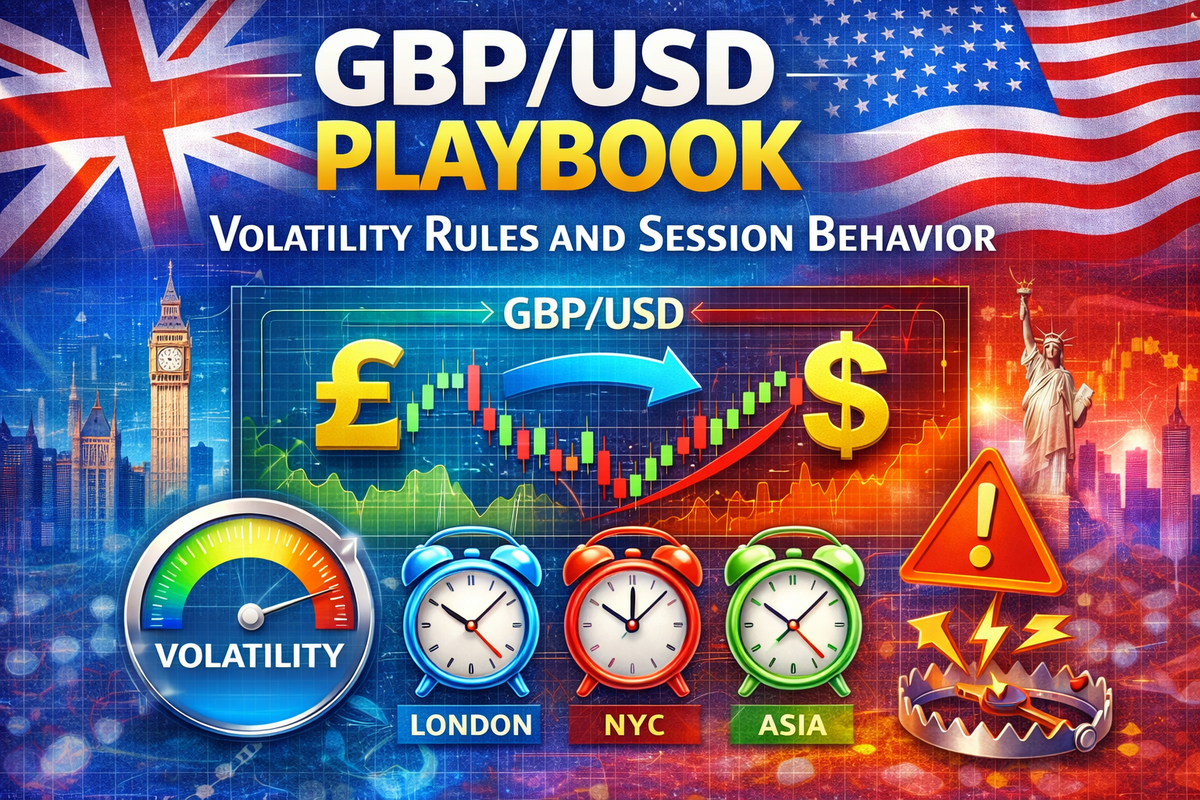
The GBP/USD currency pair, commonly known as "Cable," stands as one of the most actively traded instruments in the foreign exchange market, representing the exchange rate between the British pound sterling and the United States dollar. With an average d aily range of approximately 90 to 111.5 pips over recent years, this pair exhibits substantial volatility that creates both opportunities and risks for traders across all experience levels. Understanding the intricate patterns of volatility and session-specific behavior is essential for developing robust trading strategies that capitalize on predictable market movements while managing exposure to sudden price swings.
Understanding GBP/USD Volatility Characteristics
The Volatility Profile
GBP/USD consistently ranks as the most volatile major currency pair in the forex market, surpassing EUR/USD, USD/JPY, and other major pairs in terms of average daily movement. Recent market data indicates that the pair's five-day average volatility typically ranges between 90 and 109 pips, though this figure can expand significantly during periods of heightened economic uncertainty or major policy announcements.
The volatility structure of GBP/USD manifests across multiple timeframes, with distinct patterns emerging at hourly, daily, weekly, and monthly intervals. At the hourly level, traders can expect movements averaging 10.9 pips, while daily volatility extends to approximately 56 pips under normal market conditions. Weekly movements average around 144 pips, with monthly volatility reaching 258 pips, reflecting the cumulative impact of economic data releases, central bank decisions, and geopolitical developments.
Factors Driving Volatility
Several fundamental factors contribute to GBP/USD's elevated volatility profile. The Bank of England's monetary policy decisions, particularly interest rate adjustments, exert substantial influence on the pound's value. As of January 2026, the BoE has reduced its interest rate to 3.75% and markets anticipate further reductions throughout the year as inflation eases and UK labor market conditions remain weak.
On the US side, Federal Reserve policy, employment data (particularly Non-Farm Payrolls), Consumer Price Index reports, and GDP figures create substantial price swings, typically during the New York trading session. The pair's sensitivity to political developments, including Brexit-related news, elections, and policy changes, adds an additional layer of volatility that distinguishes it from other major pairs.
Trading Session Analysis and Optimal Timing
The Asian Session (Tokyo)
The Asian trading session, spanning from 3:00 AM to 12:00 PM GMT (or 9:00 AM to 6:00 PM JST), represents the quietest period for GBP/USD activity. During these hours, when London and New York markets remain closed, liquidity diminishes significantly, leading to wider spreads and choppy, range-bound price action.
Traders should generally avoid aggressive strategies during the Asian session for GBP/USD, as reduced liquidity can result in false breakouts and unpredictable price movements. However, this period can be suitable for range-based or mean-reversion strategies, where traders identify overnight ranges and position themselves for potential breakouts when the London session opens. The lower volatility environment also allows for careful analysis and trade planning without the pressure of rapid price movements.
The London Session
The London session, running from 8:00 AM to 4:00 PM GMT (3:00 AM to 11 AM EST), marks the beginning of peak activity for GBP/USD. As the UK's financial center awakens, trading volume surges dramatically, with the British pound becoming most sensitive to news and economic releases during this window.
The first few hours of the London session often witness the "London breakout," where the pair exits overnight ranges and begins trending with conviction. Key UK data releases, including GDP figures, manufacturing and services PMI reports, employment statistics, and inflation data, typically emerge during this session and can spark significant directional movements.
Volatility during the London session accounts for roughly 35% of daily forex volume, resulting in tighter effective spreads and more repeatable intraday entry points. GBP/USD typically shows approximately a 15% increase in volatility during London hours, making it particularly attractive for day traders and momentum-based strategies.
The London-New York Overlap: The Golden Window
The most explosive and profitable trading window for GBP/USD occurs during the London-New York overlap, specifically between 1:00 PM and 4:00 PM GMT (8:00 AM to 12:00 PM EST). This four-hour period brings together the two most significant forex markets globally, creating exceptional conditions for trading.
During this overlap, both UK and US financial markets operate simultaneously, generating the highest trading volumes of the day. Institutional investors, hedge funds, and major banks participate heavily, providing deep liquidity that compresses bid-ask spreads and accelerates price discovery. The convergence creates persistent directional legs that are suitable for various trading approaches, from scalping to swing trading.
Economic data from both nations frequently releases during this window, amplifying volatility and creating clear directional moves. For example, if US employment data surprises to the upside while UK manufacturing data disappoints, the resulting GBP/USD movement can be swift and substantial, often extending 50-100 pips or more within the overlap period.
The New York Session
The New York session, extending from 8:00 AM to 5:00 PM EST, maintains significant activity even after the London market closes. Major US economic releases during this time, including Federal Reserve interest rate decisions, FOMC statements, and key employment reports, continue to drive GBP/USD volatility.
However, traders should note that activity tends to diminish in the latter half of the New York session, particularly on Fridays when market participants close positions ahead of the weekend. This reduction in volume can lead to wider spreads and less predictable price action as liquidity dries up.
Strategic Trading Rules for GBP/USD
Session-Specific Strategies
London Session Opening Strategy: Mark the previous session's high and low levels, as these frequently get swept by liquidity-seeking institutional orders. Wait for fakeouts before fading the move, as GBP/USD often needs to take out liquidity pools before committing to a directional bias. Look for confirmations such as fair value gaps, structure shifts, and range breaks on lower timeframes before entering positions.
Overlap Trading Strategy: During the London-New York overlap, focus on high-probability setups that align with the prevailing trend. Use the Average True Range (ATR) indicator to modify stop-loss sizes according to current volatility conditions, placing wider stops during more volatile periods to avoid premature exits. Target 2-3 times the risk, with stops positioned behind the fake-out pattern or recent structural lows/highs.
Momentum Continuation Strategy: When GBP/USD establishes a clear trend during the London session, use the overlap period to add to winning positions as institutional order flow confirms the directional bias. Monitor volume indicators and the US Dollar Index (DXY) for confirmation, as GBP/USD moves inversely with the dollar.
Volatility-Based Position Sizing
Effective position sizing adjusted for volatility represents a cornerstone of successful GBP/USD trading. During periods of elevated volatility, reduce position sizes to maintain consistent risk exposure across trades. The volatility percentage scaling approach involves calculating the asset's current volatility as a percentage of price and adjusting position sizes inversely.
For example, if GBP/USD typically moves 80 pips daily but current volatility has expanded to 120 pips, reduce position sizes by approximately 33% to maintain equivalent risk levels. This approach prevents overleveraging during turbulent market conditions while allowing for larger positions during calmer periods.
Risk Management Protocols
Implement multi-layered risk management that accounts for GBP/USD's volatile nature. Stop-loss orders should be placed beyond recent structural points of interest, accounting for the pair's propensity for liquidity sweeps. Avoid placing stops at obvious technical levels where institutional traders deliberately hunt retail stop clusters.
Consider using time-based stops in addition to price-based stops, particularly during low-liquidity periods or ahead of major economic announcements. If a trade fails to move in the intended direction within a predetermined timeframe, exit the position regardless of current profit or loss to preserve capital for higher-probability setups.
Technical Analysis and Order Flow Considerations
Understanding Institutional Order Flow
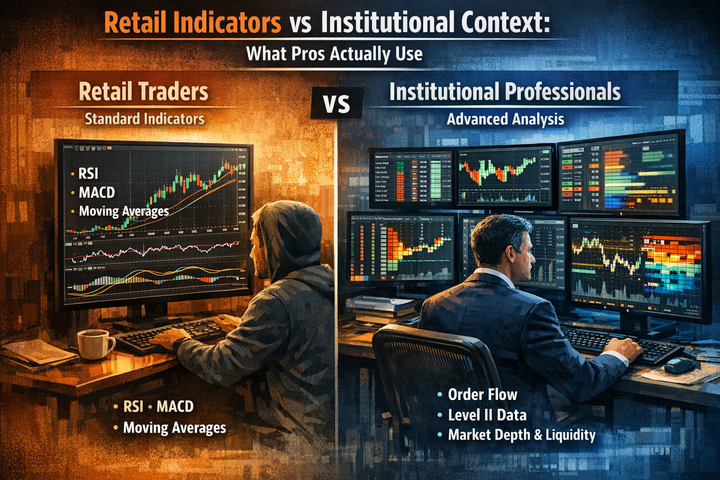
GBP/USD price movements are heavily influenced by institutional order flow, particularly during the London session when major banks and financial institutions execute large orders. Recognizing signs of institutional activity can provide significant advantages for retail traders.
Liquidity pools form at key price levels where stop losses cluster, typically just beyond recent swing highs and lows. Institutions deliberately push prices into these zones to trigger stops and generate the liquidity required to fill their substantial orders. After triggering these stops and creating "liquidity sweeps," price often reverses sharply in the opposite direction as institutions complete their accumulation or distribution.
Fair value gaps—areas on the chart where price moves aggressively with minimal trading activity—represent imbalances in supply and demand that institutions frequently revisit. When GBP/USD creates a fair value gap during a strong move, marking this zone for potential retest entries can yield high-probability trading opportunities.
Correlation Analysis with DXY
The US Dollar Index (DXY) maintains a strong inverse correlation with GBP/USD, making it an essential confirmation tool for trade validation. When DXY rises, EUR/USD and GBP/USD typically decline, and vice versa. However, divergences between these instruments can signal important turning points or institutional accumulation patterns.
For instance, if GBP/USD begins forming higher lows while DXY simultaneously shows a failure swing with lower highs, this divergence suggests possible accumulation in the pound while the dollar weakens—a strong signal for bullish directional bias. Monitoring both instruments simultaneously enhances the probability assessment of potential trade setups.
Technical Indicator Application
The Average True Range (ATR) serves as the primary volatility measurement tool for GBP/USD traders. By calculating the average range over a specified period (typically 14 days), ATR quantifies current volatility levels and helps determine appropriate stop-loss distances. During periods when ATR expands, widen stop-loss placements proportionally to avoid being stopped out by normal market noise.
Bollinger Bands provide another valuable volatility-based tool, dynamically adjusting to market conditions by plotting standard deviations around a moving average. In volatile markets, set stop losses just beyond these bands to allow trades sufficient room to develop according to recent price fluctuations.
The Relative Strength Index (RSI) helps identify overbought and oversold conditions, though traders must exercise caution when using momentum indicators in trending environments. In strong trends, RSI can remain in extreme territories for extended periods, making it more useful for identifying divergences rather than absolute overbought or oversold levels.
Advanced Trading Techniques
Scalping During High-Liquidity Windows
Scalping strategies work particularly well during the London-New York overlap when spread compression and high liquidity enable rapid trade execution. Scalpers typically target 5-15 pip movements, entering and exiting multiple positions throughout the four-hour window.
The key to successful scalping lies in precise timing and strict discipline. Use 5-minute charts with 20 and 50-period moving averages, combined with RSI, to identify micro-trends and momentum shifts. Enter trades when price crosses above the moving averages with RSI confirming momentum, and exit immediately when momentum weakens or predetermined profit targets are reached.
Swing Trading Structure
Swing traders focus on capturing larger movements that develop over several days to weeks, requiring a different approach to session analysis. Rather than trading every session, swing traders identify key structural levels during the London session and place pending orders to capture breakouts or reversals.
The optimal approach involves marking major support and resistance zones during the London session, then waiting for the overlap period to provide confirmation through increased volume and directional commitment. Place stops beyond recent swing extremes, accounting for GBP/USD's tendency to sweep liquidity before committing to larger moves.
News Trading Strategies
Major economic releases from both the UK and US create substantial volatility spikes that experienced traders can exploit. Bank of England interest rate decisions, UK inflation reports, and employment data generate sharp pound movements, while US Non-Farm Payrolls, Federal Reserve decisions, and GDP reports impact the dollar side of the equation.
The safest approach to news trading involves waiting for the initial volatility spike to subside, then entering positions once a clear directional bias emerges. This technique avoids the chaotic price action and wide spreads that characterize the first few minutes following major announcements, while still capturing the subsequent trending move.
Weekly and Monthly Patterns
Intraweek Volatility Distribution
GBP/USD exhibits predictable patterns throughout the trading week. Mondays typically show lower activity as markets adjust after the weekend, with institutional traders assessing weekend developments before committing to positions. Trading volumes and volatility peak from Tuesday through Thursday when both UK and US markets operate at full capacity.
Fridays present a mixed environment, with strong activity during the morning sessions but declining participation in the afternoon as traders close positions ahead of the weekend. This "Friday fade" can lead to reduced volatility and choppy price action, making it less suitable for aggressive trading strategies.
Seasonal Considerations
Monthly patterns reveal that volatility tends to concentrate around the first week when major central bank meetings and employment reports typically occur. The middle of the month often sees reduced activity unless significant geopolitical developments emerge. Month-end flows from portfolio rebalancing and corporate hedging activities can create temporary volatility spikes that experienced traders monitor for short-term opportunities.
Current Market Context: 2026 Outlook
As of January 2026, GBP/USD continues recovering from 2025 movements, with the pair attempting to resume its longer-term uptrend. The Bank of England's dovish stance, having cut rates to 3.75% with expectations for further reductions, creates a fundamental headwind for sterling. However, market positioning and technical factors suggest that deeper declines should find support at key levels.
J.P. Morgan Global Research forecasts suggest GBP/USD could trade around 1.36 by late 2025 before recovering toward 1.39 by March 2026. These projections reflect the interplay between BoE monetary policy, Federal Reserve decisions, and broader economic fundamentals affecting both currencies. Traders should remain aware that longer-term GBP vulnerabilities, including persistent current account deficits, labor market challenges, and productivity underperformance, may periodically pressure the pound.
Risk Management Best Practices
Capital Preservation Principles
Successful GBP/USD trading demands rigorous capital preservation protocols. Never risk more than 1-2% of trading capital on any single position, regardless of confidence level. This conservative approach ensures that even a string of losses will not significantly impair the trading account, allowing for recovery when market conditions improve.
Diversification across multiple currency pairs helps reduce concentration risk, though traders should avoid excessive correlation. Since GBP/USD moves inversely with the US Dollar Index, holding simultaneous positions in multiple USD pairs can create hidden correlation exposure that amplifies risk during dollar-driven market moves.
Hedging Strategies
Advanced traders sometimes employ hedging techniques to protect existing GBP/USD positions during periods of uncertainty. One approach involves taking offsetting positions in correlated pairs such as EUR/USD, though this requires careful management of position sizes to account for correlation coefficients that change over time.
Options strategies provide another hedging avenue, allowing traders to purchase put or call options that profit if the market moves against their primary position. While options require premium payments that reduce overall profitability, they provide defined-risk protection during highly uncertain periods such as major central bank meetings or geopolitical crises.
Psychological Discipline
The psychological challenges of trading GBP/USD's volatile price action cannot be overstated. Rapid price movements can trigger emotional responses that lead to impulsive decisions, such as moving stop losses or revenge trading after losses. Developing and strictly adhering to a pre-defined trading plan helps maintain emotional control during turbulent market conditions.
Keeping detailed trading journals that record not only trade outcomes but also emotional states and decision-making processes enables continuous improvement. Review these journals regularly to identify patterns of emotional interference and develop strategies to mitigate their impact on trading performance.
Conclusion
Mastering GBP/USD trading requires comprehensive understanding of the pair's volatility characteristics, session-specific behavior patterns, and institutional order flow dynamics. The London-New York overlap consistently provides the highest probability trading opportunities, combining deep liquidity, tight spreads, and clear directional movements that favor multiple trading styles.
Effective volatility management through dynamic position sizing, ATR-based stop placement, and correlation analysis with the US Dollar Index separates consistently profitable traders from those who struggle with this challenging pair. By aligning trading strategies with optimal session windows, respecting the pair's propensity for liquidity sweeps, and maintaining disciplined risk management, traders can navigate GBP/USD's volatile nature while capitalizing on its substantial profit potential.
The key lies in recognizing that volatility represents opportunity rather than obstacle—when properly understood and strategically approached, GBP/USD's dynamic price action becomes a reliable source of trading profits across multiple timeframes and market conditions. Continuous learning, adaptation to evolving market structures, and unwavering discipline in execution form the foundation of long-term success in trading the Cable.


Comments ()