Forex Trading for Beginners: The Complete Guide to Pips, Pairs, Bullish/Bearish, and Your First Trade

Forex (short for foreign exchange) is the global market where currencies are exchanged. If you’ve ever swapped GBP to EUR for a trip, you’ve participated in forex. The difference with forex trading is that you are intentionally buying one currency and selling another to potentially profit from price movement.
Forex is also one of the largest financial markets in the world. In April 2025, average daily trading in global OTC FX markets was about $9.6 trillion per day.
This guide explains forex in plain English: how currency pairs work, what pips are, what “bullish/bearish” means, how leverage and margin work, the key costs, and a practical step-by-step framework for trading responsibly.
Important risk note (UK context): most retail clients lose money trading leveraged products like CFDs, and the FCA has repeatedly highlighted this risk. Treat forex trading as high-risk unless you have a clear plan and strong risk controls.
1) What “Forex” actually is
Forex is the market for exchanging currencies. It exists because:
- businesses import/export and need to pay in different currencies
- investors hedge international exposure
- banks and institutions manage cash flows across countries
- traders speculate on currency moves
Forex is mostly decentralised and trades “over the counter” (OTC), not on one single exchange. Major dealing centres include the UK, US, Singapore, and others. The UK remains the largest FX centre by share of trading.
2) Currency pairs: the core concept
In forex, you trade pairs, because you’re always exchanging one currency for another.
Example: EUR/USD
- Base currency: EUR (the first one)
- Quote currency: USD (the second one)
If EUR/USD = 1.1000, it means 1 euro costs 1.10 US dollars.
“Long” and “Short”
- Going long EUR/USD = you buy EUR and sell USD (you expect EUR to strengthen vs USD).
- Going short EUR/USD = you sell EUR and buy USD (you expect EUR to weaken vs USD).
3) Bid, Ask, and Spread (how pricing works)
Forex quotes usually show two prices:
- Bid: the price you can sell at
- Ask: the price you can buy at
Example quote: EUR/USD 1.1000 / 1.1002
- If you buy, you pay 1.1002 (ask)
- If you sell, you receive 1.1000 (bid)
Spread
The spread is the difference between bid and ask. Here it is 0.0002, which is 2 pips (more on pips next). Spreads are a core trading cost.
4) Pips and pipettes (the “points” of forex)
A pip is the standard unit used to measure forex price movement.
For most pairs, 1 pip = 0.0001 (the 4th decimal place).
Example: EUR/USD moves from 1.1000 to 1.1005
That’s 5 pips.
JPY pairs are different
For pairs like USD/JPY, a pip is usually 0.01 (2nd decimal place), e.g. 145.20 to 145.35 is 15 pips.
Pipettes
Some brokers quote an extra decimal (a “pipette”), for finer pricing. For EUR/USD, 1 pipette would be 0.00001.
5) Bullish vs bearish (and other common terms)
These two words show up everywhere in trading.
- Bullish = expecting price to rise (optimistic)
- Bearish = expecting price to fall (pessimistic)
Related terms:
- Trend: general direction over time (uptrend, downtrend, range)
- Range: price oscillates between support and resistance
- Support: a zone where price often stops falling (buyers show up)
- Resistance: a zone where price often stops rising (sellers show up)
- Breakout: price moves beyond a key level with momentum
- Fakeout: price breaks a level then reverses quickly
6) Lots, position size, and pip value (how trade sizing works)
Forex positions are often described in lots:
- Standard lot: 100,000 units of the base currency
- Mini lot: 10,000 units
- Micro lot: 1,000 units
Typical pip values (rule of thumb)
For many USD-quoted major pairs:
- 1 standard lot ≈ $10 per pip
- 1 mini lot ≈ $1 per pip
- 1 micro lot ≈ $0.10 per pip
Pip value can vary depending on the pair and your account currency, but these approximations help you understand the risk quickly.
7) Leverage and margin (powerful, but dangerous)
Leverage
Leverage lets you control a larger position with a smaller amount of money. It increases both gains and losses.
Example: with 30:1 leverage, controlling £30,000 of exposure may require roughly £1,000 of margin (simplified).
Margin
Margin is the deposit your broker requires to open/maintain a leveraged position. If the trade moves against you and your account equity falls too far, you may get:
- a margin call (request to add funds)
- or a stop-out (positions closed automatically)
In the UK, the FCA has imposed leverage restrictions for retail clients in CFDs and similar products (with caps depending on the underlying).
Key takeaway: leverage is not a strategy. It is a tool that can magnify outcomes. Use position sizing and stop-loss rules first; leverage comes last.
8) What moves forex prices?
Currencies move for many reasons, but a simple framework is:
A) Interest rates and central banks
Interest rates often influence currency strength because money tends to flow toward higher yields (all else equal). Central bank guidance can move markets quickly.
B) Inflation and growth
Inflation data, jobs numbers, GDP releases, and wage growth can shift rate expectations—so they affect currencies.
C) Risk sentiment (“risk-on / risk-off”)
In “risk-off” periods, traders may seek perceived safe-haven currencies (context-dependent). In “risk-on,” they may move into higher-yielding or growth-sensitive currencies.
D) Geopolitics and shocks
Elections, conflict, energy price spikes, surprise policy announcements—anything that changes expectations can move FX.
9) Forex sessions and when the market is most active
Forex runs essentially 24 hours a day, five days a week, following global time zones. Liquidity changes depending on which major financial centres are open.
A widely cited “high activity” window is the London/New York overlap, which is typically the most liquid period.
For traders, this matters because:
- spreads often tighten during liquid hours
- breakouts are more likely when volume is high
- news releases can cause spikes and slippage
10) Core order types (how you enter and exit)
Most trading platforms offer:
- Market order: enter immediately at current price (can slip in fast markets)
- Limit order: enter at a better price than current (you set the price)
- Stop order: triggers entry after price reaches a level (often used for breakout entries)
- Stop-loss (SL): exit if price hits your risk limit
- Take-profit (TP): exit when a target is reached
A disciplined trader thinks in advance:
- where to enter
- where to exit if wrong (stop-loss)
- where to take profit
- how much to risk
11) The 3 main ways traders analyse forex
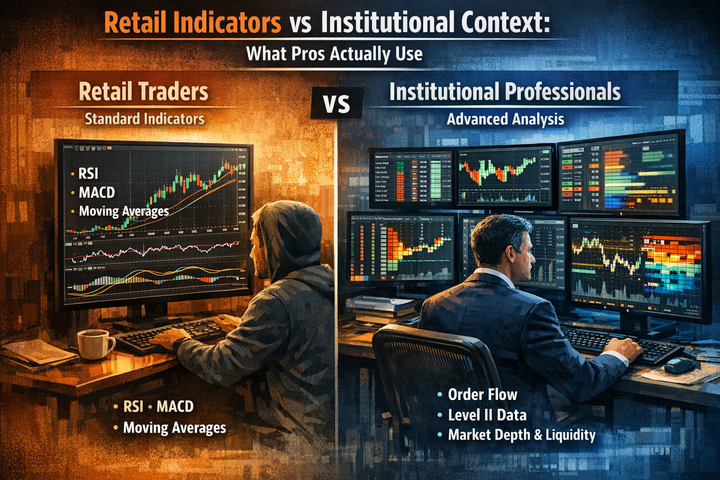
A) Technical analysis (price-based)
Uses charts and patterns to estimate probability:
- trendlines and structure (higher highs / lower lows)
- support and resistance zones
- moving averages
- RSI, MACD, etc. (indicators)
Best used as a decision framework, not as “magic signals.”
B) Fundamental analysis (macro-based)
Focuses on economics and central banks:
- interest rate differentials
- inflation trends
- employment data
- growth outlook
- policy expectations
C) Sentiment/positioning (who is on which side)
Looks at whether the market is crowded one way, or whether risk appetite is shifting.
Most real-world trading blends all three, even if one is dominant.
12) “How to trade forex” — a practical, beginner-safe framework
This is a process you can follow without pretending trading is easy.
Step 1: Decide your style (timeframe)
Common styles:
- Scalping: seconds to minutes (high intensity, spread-sensitive)
- Day trading: in and out same day (news and volatility matter)
- Swing trading: days to weeks (more patient, wider stops)
- Position trading: weeks to months (macro-driven)
Beginners often do better starting slower (swing/day) because it reduces overtrading.
Step 2: Pick a small “universe”
Instead of watching 30 pairs, pick 3–6:
- one or two majors (EUR/USD, GBP/USD)
- one JPY pair
- one commodity-linked pair (e.g., AUD/USD) if you understand it
Step 3: Build one simple setup (your “playbook”)
Example playbooks:
- trend pullback: trade with the trend after a retracement
- range trade: fade extremes at support/resistance
- breakout: enter when price escapes a well-defined range
Keep it testable: define what must be true before you enter.
Step 4: Define risk per trade (non-negotiable)
A common rule is risking a small fixed % of account equity per trade (many use 0.5%–1%). This is not about being conservative; it’s about staying in the game.
Risk is controlled by:
- stop-loss distance (pips)
- position size (lots)
- account equity
Step 5: Use a stop-loss like a seatbelt
A stop-loss is not “negative energy.” It’s professional discipline.
Also understand slippage: in fast markets, your fill can be worse than expected.
Step 6: Track results like a business
Use a journal:
- why you entered
- where you placed SL/TP and why
- what session/news context existed
- whether you followed the plan
- outcome (R multiple, not just £)
A profitable trader often wins by process quality, not by being “right” every time.
13) A simple pip-based example (to connect the dots)
Let’s say you trade EUR/USD and you see:
- price is in an uptrend
- it pulls back to a support zone
- you want to buy with a defined stop
You plan:
- Entry: 1.1000
- Stop-loss: 1.0970 (30 pips risk)
- Take-profit: 1.1060 (60 pips reward)
That’s risk:reward = 1:2.
Now position sizing:
- If you risk £50 on the trade and your stop is 30 pips,
- you can risk about £1.67 per pip (£50 / 30).
That pip value translates into a lot size (depends on broker/account currency), but the logic stays the same:
Decide risk in £ first, then calculate the position size.
This is how you avoid the classic beginner mistake: choosing a random lot size and hoping for the best.
14) The real costs of forex trading
Even if a broker advertises “commission-free,” trading still has costs:
- Spread: the built-in bid/ask difference
- Commission: sometimes charged on top (common in “raw spread” accounts)
- Swap/rollover: financing cost/credit if you hold overnight (varies by pair and rate differentials)
- Slippage: worse fills during volatility
- Platform/data fees: less common for retail, but possible
These costs are why high-frequency trading is harder for beginners: spreads and slippage can quietly eat your edge.
15) Common beginner mistakes (and what to do instead)
- Overleveraging
Fix: set max risk per trade and cap lot sizes. - No stop-loss
Fix: every trade has an exit if wrong. - Revenge trading after a loss
Fix: enforce a daily loss limit and take breaks. - Trading during major news without a plan
Fix: either avoid news or build a specific news rule-set. - Strategy hopping
Fix: test one approach for a meaningful sample size.
The FCA has highlighted that a high proportion of retail clients lose money in CFDs, reinforcing why risk discipline is essential.
16) Mini glossary (quick definitions)
- Pip: standard FX price movement unit (often 0.0001; JPY pairs often 0.01).
- Spread: difference between bid and ask.
- Bullish / Bearish: expecting price up / down.
- Long / Short: buy base currency / sell base currency.
- Lot: position sizing unit (standard 100,000; mini 10,000; micro 1,000).
- Leverage: borrowed exposure that magnifies outcomes.
- Margin: required deposit to hold leveraged positions.
- Stop-loss / Take-profit: predefined exit for loss / profit.
- Slippage: filled at a worse price than expected.
- Swap/Rollover: overnight financing cost/credit.
Closing perspective
Forex is not a shortcut to wealth. It is a global market driven by macroeconomics, liquidity, and sentiment—and it rewards disciplined risk management and repeatable process far more than “clever predictions.”

Comments ()