Dividend Investing for Passive Income: Building a Portfolio That Pays You Monthly
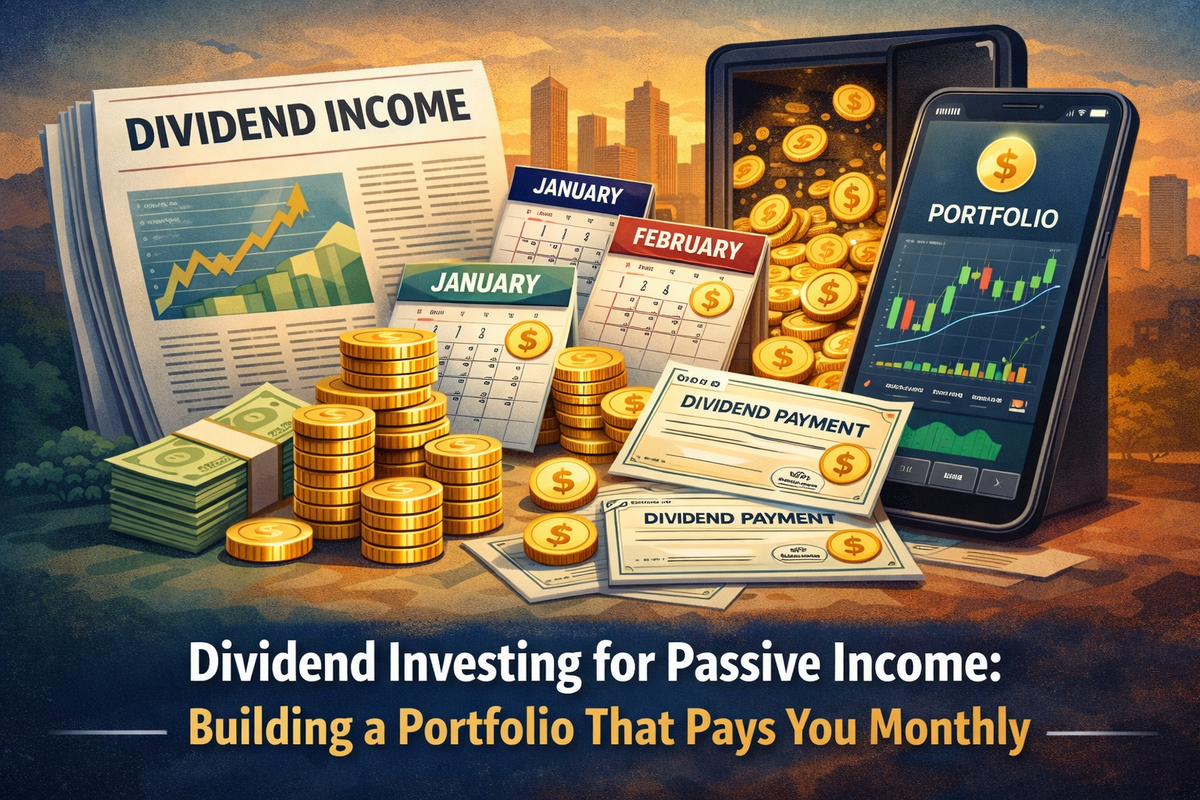
Dividend investing represents one of the most reliable strategies for generating passive income while building long-term wealth. Unlike capital gains that require selling assets to access cash, dividends provide regular income payments while investors maintain ownership of their underlying investments. This dual benefit—consistent cash flow plus potential appreciation—makes dividend investing particularly attractive for those seeking financial independence, supplemental retirement income, or simply a more tangible return on their capital.
The concept of receiving monthly payments from a carefully constructed portfolio transforms investing from an abstract wealth-building exercise into a practical income-generating system. While many individual stocks pay dividends quarterly, strategic portfolio construction enables investors to receive payments every single month, creating predictable cash flow similar to a paycheck. This comprehensive guide explores the fundamentals of dividend investing, from selecting quality dividend stocks to building a diversified portfolio that delivers sustainable monthly income.
Understanding Dividend Investing Fundamentals
Dividends represent a portion of a company's earnings distributed to shareholders, typically paid in cash directly into investment accounts. When a company generates profits, management faces several options: reinvest in business operations, pay down debt, repurchase shares, or distribute earnings to shareholders as dividends. Companies that regularly pay dividends signal financial health, management confidence in future earnings, and a commitment to returning value to shareholders.
Types of Dividends
Cash dividends represent the most common form, paid as a fixed amount per share directly to shareholder accounts. A company paying a £0.50 quarterly dividend on stock priced at £40 per share yields 5% annually ($2 annual dividend divided by $40 share price). These payments typically occur quarterly, though some companies pay monthly, semi-annually, or annually.
Stock dividends involve issuing additional shares instead of cash. While less common, these dividends increase share ownership without tax consequences until shares are sold. Special dividends represent one-time payments beyond regular dividend schedules, often occurring after exceptional profitability or asset sales.
The Power of Dividend Reinvestment
Dividend reinvestment plans (DRIPs) automatically use dividend payments to purchase additional shares, accelerating wealth accumulation through compounding. Rather than receiving cash, investors acquire more shares that themselves generate dividends, creating an exponential growth effect over time.
Consider an initial investment of £10,000 in a stock yielding 4% annually with 6% average annual price appreciation. Without reinvestment, this investment grows to approximately £18,000 after ten years. With dividend reinvestment, the same investment grows to approximately £21,900—a £3,900 difference attributable entirely to compounding. Over 30 years, this gap widens dramatically, with reinvestment generating nearly double the wealth of cash distributions.
Dividend Yields and What They Reveal
Dividend yield represents the annual dividend payment divided by the current share price, expressed as a percentage. This metric provides a snapshot of income generation relative to investment cost, but understanding its nuances proves critical for successful dividend investing.
Calculating and Interpreting Yield
The formula for dividend yield is straightforward: Dividend Yield=Current Share PriceAnnual Dividend Per Share×100%
A company paying £3 annually in dividends with shares trading at £60 yields 5%. This calculation seems simple, but interpretation requires careful analysis. A 5% yield might indicate a stable, mature company returning substantial cash to shareholders. Alternatively, it could signal a declining business whose falling share price inflates the yield artificially.
The Yield Spectrum
Conservative dividend yields typically range from 2% to 4%, often characterizing quality companies with sustainable dividends and growth potential. These businesses balance shareholder distributions with reinvestment in operations, maintaining financial flexibility while rewarding investors. Examples include established consumer goods companies, healthcare firms, and diversified industrials.
Moderate yields between 4% and 6% often indicate mature businesses in stable industries with limited growth prospects but reliable cash generation. Utilities, real estate investment trusts, and telecommunications companies frequently occupy this space. While growth may prove modest, these investments provide attractive income with reasonable stability.
High yields exceeding 6% demand scrutiny. Occasionally, these yields reflect genuinely attractive opportunities in temporarily depressed sectors or overlooked companies. More commonly, elevated yields signal potential problems: declining business fundamentals, unsustainable payout ratios, or impending dividend cuts. The market often correctly prices risk, and exceptionally high yields frequently precede dividend reductions or eliminations.
Yield Traps and How to Avoid Them
Yield traps occur when attractive dividend yields lure investors into deteriorating businesses. A company whose share price falls from £100 to £50 while maintaining a £5 annual dividend sees its yield double from 5% to 10%. Inexperienced investors might view this as opportunity, but the market's pricing likely reflects legitimate concerns about dividend sustainability.
Warning signs of potential yield traps include declining revenue and earnings, deteriorating competitive positions, excessive debt levels, and payout ratios exceeding 100%. Industry-specific challenges also warrant attention—businesses in structurally declining sectors may maintain dividends temporarily while long-term prospects deteriorate.
Understanding Payout Ratios
The payout ratio measures what percentage of earnings a company distributes as dividends, calculated by dividing annual dividends by annual earnings per share: Payout Ratio=Earnings Per ShareAnnual Dividends Per Share×100%
This metric reveals dividend sustainability and management priorities. A company earning £4 per share while paying £2 in dividends maintains a 50% payout ratio, retaining half its earnings for reinvestment, debt reduction, or financial flexibility.
Healthy Payout Ratio Ranges
Sustainable payout ratios vary by industry and company maturity. Growth companies typically maintain lower ratios between 0% and 30%, prioritizing reinvestment in expansion over shareholder distributions. Technology firms, biotech companies, and rapidly growing businesses often fit this profile.
Mature companies frequently target payout ratios between 40% and 60%, balancing income generation with financial prudence. This range allows consistent dividend payments while preserving capacity to maintain distributions during economic downturns. Many blue-chip dividend stocks occupy this space.
Payout ratios exceeding 70% raise sustainability concerns, particularly for cyclical businesses. While some stable utilities and real estate investment trusts safely maintain higher ratios, most companies risk dividend cuts when economic conditions deteriorate if insufficient earnings remain after dividend payments.
Alternative Payout Metrics
Free cash flow payout ratio provides a more accurate sustainability measure for some businesses, particularly capital-intensive industries. This calculation divides dividends by free cash flow rather than earnings: FCF Payout Ratio=Free Cash FlowAnnual Dividends×100%
Real estate investment trusts use funds from operations (FFO) rather than traditional earnings, making FFO payout ratios the appropriate metric. Each industry requires understanding appropriate measurement standards to accurately assess dividend sustainability.
Selecting High-Quality Dividend Stocks
Building a successful dividend portfolio begins with rigorous stock selection, focusing on businesses with sustainable competitive advantages, reliable cash generation, and management commitment to shareholder returns.
Dividend Aristocrats and Achievers
Dividend Aristocrats—S&P 500 companies with 25+ consecutive years of dividend increases—represent the gold standard for dividend reliability. These businesses demonstrate remarkable consistency through multiple economic cycles, validating their sustainable competitive positions and resilient business models.
The United Kingdom maintains a similar concept with the Dividend Heroes list, tracking FTSE All-Share companies with ten or more consecutive years of dividend growth. These lists provide excellent starting points for identifying quality dividend investments, though they shouldn't replace individual analysis.
Requirements for maintaining Aristocrat status incentivize management to prioritize dividend growth, creating alignment between company leadership and income-focused shareholders. However, the focus on dividend growth can sometimes lead companies to maintain distributions during periods when capital might be better allocated elsewhere.
Key Quality Indicators
Strong balance sheets form the foundation of dividend sustainability. Companies with modest debt levels maintain financial flexibility to weather economic storms without cutting dividends. Debt-to-equity ratios below industry averages and interest coverage ratios exceeding 3x indicate financial health.
Consistent earnings growth over multiple years suggests a business can increase dividends sustainably rather than merely maintaining them. Companies growing earnings 5-10% annually create capacity for similar dividend growth rates while maintaining stable payout ratios.
Competitive advantages—whether through brand strength, economies of scale, network effects, or regulatory protection—enable businesses to generate consistent profits through varying economic conditions. Warren Buffett's concept of "economic moats" captures this essential characteristic. Companies lacking durable advantages face constant pressure from competitors, threatening long-term dividend sustainability.
Sector Diversification
Dividend portfolio construction requires diversification across sectors to manage risk and create stability. Different industries offer varying characteristics that complement one another in a well-balanced portfolio.
Consumer staples companies produce essential products with consistent demand regardless of economic conditions. Food manufacturers, beverage companies, and household products firms typically generate steady cash flows supporting reliable dividends. Examples include Unilever, Procter & Gamble, and Nestlé.
Utilities provide essential services with regulated returns and capital-intensive infrastructure creating high barriers to entry. Electric, gas, and water utilities often yield 4-6% with modest but reliable growth. National Grid, Southern Company, and NextEra Energy exemplify this sector.
Healthcare companies benefit from aging demographics and consistent demand for medical products and services. Pharmaceutical firms and medical device manufacturers often combine growth with dividend income. Johnson & Johnson, AbbVie, and Medtronic represent quality healthcare dividend payers.
Financial services, particularly banks and insurance companies, distribute substantial dividends during profitable periods. However, financial dividends prove more cyclical than other sectors, often facing cuts during economic downturns. JPMorgan Chase, Wells Fargo, and Prudential exemplify financial dividend stocks.
Real estate investment trusts (REITs) must distribute at least 90% of taxable income as dividends, creating inherently high yields. Diversified REITs, apartment REITs, industrial REITs, and healthcare REITs offer various risk-return profiles. Realty Income, Prologis, and Welltower represent quality REIT options.
Building a Monthly Dividend Portfolio
While most individual stocks pay dividends quarterly, strategic portfolio construction enables monthly income by selecting stocks with staggered payment schedules.
The Monthly Dividend Calendar Strategy
Companies typically pay dividends in specific months, maintaining consistent quarterly schedules. Some pay in January, April, July, and October. Others pay February, May, August, and November or March, June, September, and December. By selecting stocks from each payment schedule, investors receive dividends every month.
A simplified three-stock example illustrates this concept. Stock A pays in January, April, July, and October. Stock B pays in February, May, August, and November. Stock C pays in March, June, September, and December. Equal investment in each stock generates monthly income despite quarterly individual payments.
Practical implementation requires more diversification than three stocks. A robust monthly dividend portfolio might include 20-30 positions across various payment schedules, ensuring multiple income sources each month while maintaining sector diversification and quality standards.
Monthly Dividend Stocks
Several companies and funds pay dividends monthly rather than quarterly, simplifying portfolio construction. Realty Income, nicknamed "The Monthly Dividend Company," has paid monthly dividends since 1994 and increased its dividend for 25+ consecutive years. This diversified REIT acquires single-tenant commercial properties leased to investment-grade tenants.
Other monthly dividend stocks include STAG Industrial (industrial REITs), LTC Properties (healthcare REITs), and Pembina Pipeline (Canadian energy infrastructure). Exchange-traded funds like the Global X SuperDividend ETF also distribute monthly, though they sacrifice some control over individual holdings.
Monthly dividend preferred stocks and closed-end funds provide additional options. These securities often yield 6-8% with monthly distributions, though they carry unique risks requiring thorough understanding before investment.
Creating a Dividend Calendar
Practical dividend calendar management involves tracking ex-dividend dates (the cutoff for dividend eligibility), payment dates, and expected amounts for each holding. Spreadsheets or specialized dividend tracking applications simplify this process, projecting future income and alerting investors to potential dividend announcements.
Many brokers provide dividend calendars showing upcoming payments across portfolio holdings. These tools help investors understand cash flow timing and plan for expected income, transforming abstract investments into tangible monthly payments.
Portfolio Size and Income Targets
Determining appropriate portfolio size to generate desired income requires understanding yield expectations and practical limitations on diversification and security selection.
Income Calculations
A portfolio targeting £1,000 monthly income (£12,000 annually) with an average 4% yield requires £300,000 in invested capital. The same income target with 6% yield requires £200,000. Higher yields reduce capital requirements but often increase risk through concentration in higher-yielding, potentially less stable companies.
Conservative estimates should account for dividend variability and potential cuts. Targeting 80-90% of desired income from dividends provides a safety margin for adverse scenarios. A £1,000 monthly target might require building a portfolio generating £1,100-1,200 monthly to accommodate potential dividend reductions without falling short of income needs.
Minimum Portfolio Recommendations
Effective dividend portfolios typically require minimum investments of £50,000-100,000 to achieve adequate diversification while maintaining meaningful positions in individual securities. Smaller portfolios benefit from dividend-focused ETFs providing instant diversification and professional management, though they sacrifice individual stock selection control.
Position sizing generally suggests limiting individual holdings to 3-5% of portfolio value initially, allowing for some concentration in highest-conviction ideas while preventing excessive risk from any single position. As portfolios grow, position sizes can increase proportionally while maintaining diversification principles.
Tax Considerations for Dividend Investors
Tax treatment significantly impacts net dividend income, varying by country, account type, and individual circumstances. Understanding these implications proves essential for accurate income planning and strategic account allocation.
United Kingdom Tax Treatment
UK residents receive a £500 dividend allowance (£1,000 until 2023) annually before owing dividend tax. Beyond this allowance, dividend tax rates depend on income tax brackets: 8.75% for basic-rate taxpayers, 33.75% for higher-rate taxpayers, and 39.35% for additional-rate taxpayers.
Individual Savings Accounts (ISAs) shelter investments from dividend and capital gains taxes, making them ideal vehicles for dividend portfolios. The annual ISA contribution limit of £20,000 allows tax-efficient portfolio construction over time. Self-Invested Personal Pensions (SIPPs) provide additional tax-advantaged space for dividend investing, though withdrawals face restrictions until retirement.
United States Tax Treatment
US dividend taxation distinguishes between qualified and non-qualified dividends. Qualified dividends—from US companies and certain foreign corporations held for minimum periods—receive favorable tax rates: 0%, 15%, or 20% depending on income levels. Non-qualified dividends face ordinary income tax rates up to 37%.
Tax-advantaged accounts including Traditional IRAs, Roth IRAs, and 401(k)s eliminate annual dividend taxation, allowing reinvestment of full dividend amounts. Roth IRAs particularly benefit dividend investors since qualified withdrawals in retirement remain completely tax-free.
International Dividend Taxation
Foreign dividends often face withholding taxes in the source country before reaching investors. US stocks held by UK investors typically incur 15% US withholding tax, reduced from 30% under tax treaty provisions. UK stocks held by US investors generally avoid UK withholding tax on dividends.
Investors can often reclaim excess withholding through tax returns, though procedures vary by country and prove administratively burdensome. Holding international stocks in tax-advantaged accounts sometimes avoids foreign withholding entirely, depending on specific account rules and treaties.
Dividend Growth Investing
Focusing exclusively on current yield overlooks the powerful wealth-building potential of dividend growth. Companies consistently increasing dividends compound income over time, often providing superior long-term results compared to static high-yield approaches.
The Dividend Growth Advantage
A stock yielding 3% initially but growing dividends 7% annually doubles its dividend payment in approximately ten years. After a decade, this investment yields 6% on the original cost basis despite starting below average yields. After 20 years, the yield on cost exceeds 12%, far surpassing what higher-yielding, no-growth alternatives provide.
This dividend growth compounds wealth through two mechanisms: increasing income streams and typically appreciating share prices. Markets generally reward growing dividends with higher valuations, creating capital appreciation alongside income growth.
Identifying Dividend Growth Candidates
Companies demonstrating consistent dividend growth combine several characteristics: sustainable competitive advantages, consistent earnings growth, modest payout ratios, and management commitment to shareholder returns. Historical dividend growth rates provide evidence of this commitment, though past performance doesn't guarantee future increases.
Dividend growth rates between 5% and 10% annually prove sustainable for quality companies. Exceptionally high growth rates often reflect recovery from dividend cuts or temporary situations unlikely to continue indefinitely. Steady, moderate growth proves more valuable long-term than erratic increases and decreases.
Balancing Yield and Growth
Optimal dividend portfolios balance current income needs with future growth potential. Retirees requiring immediate income might emphasize higher-yielding positions with modest growth, accepting lower appreciation potential for superior current cash flow. Younger investors might prioritize growth over yield, building income that compounds dramatically over decades.
A balanced approach might allocate 50% to moderate-yield dividend growth stocks (2-4% yield, 6-10% growth), 30% to higher-yield stable payers (4-6% yield, 2-4% growth), and 20% to lower-yield high-growth dividends (1-3% yield, 10%+ growth). This structure provides current income while building for future needs.
Managing and Monitoring Your Dividend Portfolio
Successful dividend investing requires ongoing portfolio monitoring, periodic rebalancing, and willingness to adjust holdings when circumstances change.
Regular Portfolio Reviews
Quarterly reviews align with most companies' earnings and dividend announcements, providing natural checkpoints for portfolio assessment. Reviews should examine dividend safety through updated payout ratio analysis, earnings trends, debt levels, and competitive positioning.
Dividend announcements warrant particular attention. Increases generally signal management confidence and business strength. Maintained dividends during difficult periods demonstrate commitment but may indicate limited growth. Decreases or eliminations demand immediate analysis to determine whether holdings should be retained or sold.
When to Sell Dividend Stocks
Dividend cuts represent the most obvious sell signal, particularly when accompanied by deteriorating fundamentals. However, some cuts prove temporary responses to genuine crises, with companies later restoring dividends. Case-by-case analysis determines appropriate action.
Fundamental deterioration including market share losses, technological disruption, or regulatory challenges often justifies sales even before dividend cuts materialize. Selling before dividend reductions preserves capital for redeployment into stronger opportunities.
Valuation extremes occasionally warrant trimming positions even in quality companies. If a stock appreciates substantially, increasing from 4% to 2% of portfolio value, rebalancing maintains diversification while locking in gains. Conversely, additions during market corrections capture higher yields at attractive valuations.
Reinvestment Decisions
The choice between reinvesting dividends and taking cash distributions depends on individual circumstances and portfolio maturity. Accumulation phases favor reinvestment, maximizing compounding effects. Distribution phases require drawing income to meet living expenses.
Hybrid approaches prove practical for many investors. Reinvesting dividends during working years builds portfolio value and income. As retirement approaches, gradually shifting from reinvestment to income generation creates a smooth transition without requiring portfolio liquidation.
Common Dividend Investing Mistakes
Understanding frequent pitfalls helps investors avoid costly errors that undermine dividend portfolio success.
Chasing High Yields
The temptation to maximize current income by pursuing the highest yields consistently proves counterproductive. Extremely high yields often precede dividend cuts, resulting in permanent capital losses exceeding years of dividend income. Sustainable yields from quality companies provide superior long-term results.
Neglecting Diversification
Concentrating heavily in high-dividend sectors like utilities, REITs, and telecommunications creates sector-specific risk. Economic changes, regulatory shifts, or interest rate movements disproportionately impact these industries. Balanced sector allocation protects against such risks while maintaining attractive overall yields.
Ignoring Total Return
Focusing exclusively on dividend income while disregarding price appreciation overlooks half of investment returns. A stock yielding 5% that declines 10% produces a negative 5% total return despite attractive income. Quality dividend stocks generally appreciate over time, complementing income with capital growth.
Overweighting Dividend Stocks
While dividend investing provides numerous advantages, portfolios shouldn't consist entirely of dividend stocks. Growth stocks, international exposure, and alternative investments provide diversification benefits and growth potential that pure dividend strategies lack. Balanced portfolios typically allocate 40-70% to dividend stocks, with remaining capital in complementary strategies.
Building Your Monthly Income Stream
Dividend investing transforms abstract wealth accumulation into tangible monthly income, providing financial security and independence through reliable cash flow. By selecting quality companies with sustainable competitive advantages, diversifying across sectors and payment schedules, and maintaining reasonable yield expectations, investors build portfolios generating dependable income for decades.
The journey from initial investment to substantial monthly income requires patience, discipline, and consistent execution. Starting with solid research and quality stock selection, gradually building positions through regular contributions, and reinvesting dividends during accumulation phases creates compound growth that eventually produces meaningful income streams.
Success in dividend investing isn't about chasing the highest yields or attempting market timing. Rather, it's about identifying businesses with durable competitive positions, management teams committed to shareholder returns, and financial strength to maintain and grow dividends through various economic conditions. These companies reward patient investors with steadily increasing income that often exceeds initial investment amounts after sufficient time.
Whether building toward retirement income, supplementing existing earnings, or creating financial independence, dividend investing offers a proven path to sustainable monthly cash flow. The combination of current income, dividend growth, and capital appreciation provides comprehensive returns that address both immediate needs and long-term goals. By following sound principles, maintaining discipline, and focusing on quality over yield, investors construct portfolios that literally pay them monthly while building lasting wealth.


Comments ()